

Being told you need a root canal can feel alarming, but modern endodontic care is focused on relief, predictability, and preserving your natural tooth whenever possible. A contemporary root canal is often no more uncomfortable than a standard dental filling, and it’s usually the most reliable way to stop pain, remove infection, and keep your smile intact.
Our practice emphasizes gentle, evidence-based treatment delivered with the latest instruments and techniques. Comfort, clear explanations, and careful follow-up are priorities so you can make decisions about your dental health with confidence.
Saving a tooth through root canal therapy preserves both function and appearance. When a tooth’s internal tissues have been compromised by decay or trauma, restoring the root and sealing the canals allows the remaining tooth structure to continue supporting chewing, speaking, and facial balance. For many people, this approach prevents more invasive work later on.
Root canal treatment has a high success rate when performed with meticulous cleaning, shaping, and sealing of the canals. The goal is to eliminate infection, reduce the chance of reinfection, and restore the tooth so it can function normally for years or decades with proper care.
Choosing to preserve a tooth rather than extract it also helps maintain the alignment of adjoining teeth and avoids the bone loss that can follow removal. In many cases, keeping the natural tooth leads to better long-term oral health and simpler maintenance.

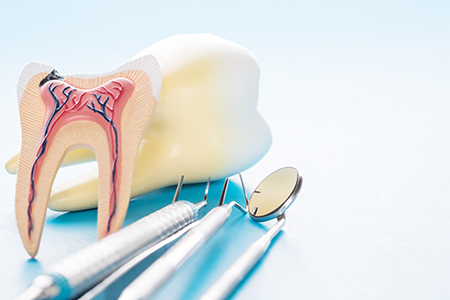
Each tooth contains a central chamber of connective tissue, blood vessels, and nerves known collectively as the dental pulp. The pulp helps the tooth develop and provides sensory feedback, including sensitivity to temperature and pressure. When bacteria penetrate deep enough through decay or a crack, the pulp can become inflamed, infected, or necrotic.
Symptoms that often indicate pulpal involvement include persistent discomfort, heightened sensitivity to temperature, or pain when biting. Sometimes a tooth with severe internal damage shows no obvious symptoms and is first detected during routine radiographs or examinations.
When the pulp cannot recover on its own, root canal therapy removes the damaged tissues, disinfects the interior of the tooth, and seals the system to prevent future infection. This approach allows the tooth to remain in function without the need for extraction.
Common signs that warrant evaluation include—but are not limited to—the following warning signals:
Ongoing, stubborn tooth pain is a frequent indicator that the internal tissues are inflamed or infected. Pain that wakes you from sleep or doesn’t respond to simple measures should be examined promptly to determine whether root canal therapy is appropriate.
Teeth that produce intense, lingering pain to hot or cold stimuli can signal irritated or dying pulp. This heightened sensitivity often precedes more severe problems and is a useful early warning sign.
If pressure or light contact causes pain, it may indicate that the nerve tissues are compromised or that infection has reached the supporting structures. Prompt evaluation helps prevent progression.
A tooth that becomes discolored after injury or over time can reflect internal changes including pulp death. While discoloration alone doesn’t always mean root canal therapy is required, it is a sign to investigate.
Trauma that breaks or fractures a tooth may expose or wound the internal tissues. When enough of the pulp is affected, root canal treatment can often save the tooth and prevent infection from spreading.
Localized swelling, a pimple-like bump on the gum, or pus drainage are signs that infection is present and may be advancing. These symptoms require timely attention to reduce the chance of complications.
Infections that involve the supporting bone can cause a tooth to feel loose. Treating the source of infection with root canal therapy often allows healing of the surrounding tissues and can restore stability.

Delaying evaluation or treatment can allow infection to deepen, increasing the likelihood of pain, swelling, and more complex procedures later. Early recognition and intervention usually make the process smoother and reduce the risk of complications that could affect nearby teeth or surrounding bone.
Occasionally, a tooth that needs treatment shows no clear symptoms and is discovered during a routine comprehensive, routine exam or on an X-ray. These findings give an opportunity to address the problem before symptoms escalate.
Timely care helps preserve more of the natural tooth structure and often simplifies the restorative work that follows root canal therapy. Prompt treatment also reduces the chance that infection will spread or that an extraction will become necessary.
Modern root canal procedures are performed with instruments and materials designed to minimize discomfort and maximize predictability. Treatment typically begins with local anesthesia to ensure the area is numb, and additional comfort measures are available for anxious patients through dental sedation if appropriate.
The dentist isolates the tooth, accesses the internal chamber, and removes the diseased pulp. Canals are cleaned, shaped, and disinfected to reduce bacterial presence. Once prepared, they are filled with a biocompatible material that seals the system against reinfection.
Some teeth can be treated in a single visit; others require multiple visits depending on anatomy and the presence of infection. After the root canal portion is complete, the tooth typically needs a permanent crown or similar restoration to protect and strengthen it for normal function.
Recovery from a root canal is generally straightforward. You may feel some tenderness or mild soreness for a few days as the tissues settle, but the severe pain associated with an infected nerve is usually relieved by the procedure itself. Over-the-counter pain relievers are often enough to manage discomfort, and your provider will advise if anything stronger is needed.
Protecting the treated tooth until its permanent restoration is placed is important. A temporary filling is commonly used after the root canal and should be treated gently to avoid fracture. Chewing on the treated side should be limited until the final crown or restoration is completed.
Good oral hygiene and routine dental visits are key to the long-term success of a tooth that has had root canal therapy. With proper care, many treated teeth remain functional for the rest of a patient’s life.
If you notice increasing pain, persistent swelling, fever, or any new signs of infection after treatment, contact our office promptly so we can evaluate the situation and recommend appropriate next steps.
Root canal therapy is a reliable, conservative solution for saving teeth that would otherwise be lost to infection or trauma. If you have questions about the procedure or would like to discuss symptoms you’re experiencing, please contact our office for more information.


A root canal procedure is the best way to save a tooth that has been damaged by decay or injury and preserve your natural smile. The alternative is an extraction and treatment to replace the tooth. While at times a tooth is non-restorable and an extraction is the only option, when possible, it’s best to try and save your natural tooth. With proper care, a tooth with root canal therapy can serve your smile well for many years to come.
Despite lingering myths from before the age of modern dental anesthesia and technology, having a root canal procedure today is as routine and comfortable as visiting the dentist for a filling. While the procedure is performed under local anesthesia with your tooth completely numbed, we can also discuss options in dental sedation.
Whether the symptoms of a dental infection subside after a course of antibiotics, a draining abscess provides you with some temporary pain relief, or a tooth with radiographic evidence of pathology has not yet developed symptoms, it’s essential, before an infection worsens or occurs, to have a root canal procedure performed. In this way, the tooth can be disinfected, filled, and sealed to protect your health and avoid further problems.
If you have sustained a dental injury, have a toothache, jaw pain, swelling, or are experiencing any other unusual and uncomfortable oral symptoms, contact our office immediately for care. Dental problems that have not been evaluated and treated can significantly worsen, producing more severe damage and consequences for the involved teeth, your oral health, and even your overall wellbeing. Once you get in touch with our office, our friendly and compassionate office team will get you in for care at your earliest convenience.
While some root canal procedures can be completed in one visit, others may involve 2 or 3 appointments. How long it takes depends on various factors, including active infection, the number of canals in the tooth, and the tooth’s location or anatomy.
With a success rate that exceeds 95%, root canal therapy remains the most effective procedure to save a tooth in which the inner vital tissues have been damaged. However, as with all healthcare procedures, there are a small percentage of cases where the teeth become symptomatic a second time. The good news is that many of these teeth can still be saved with root canal retreatment or a minor surgical procedure known as an apicoectomy.
The best ways to maintain a tooth with root canal therapy are to get the proper restoration required to rebuild and protect the tooth, maintain proper oral hygiene, and schedule appointments for routine dental checkups and care.
Saving a tooth with root canal therapy is a wise investment that, in the long run, is typically less costly and invasive than having the tooth extracted and replaced with a fixed bridge or implant. As far as the exact cost of care, it can vary depending on which tooth is being treated. Many dental insurance plans provide coverage for root canal therapy. At the office of Andrew J Najem, DDS, we do our best to optimize your dental benefits and minimize your out-of-pocket expenses. Our staff will answer all your questions about the cost of care and discuss all your payment options.
At the office of Andrew J Najem, DDS, we use the latest technology and most effective methods of care to provide precise and gentle care. Our reputation for excellence is based upon a consistent record of achieving successful treatment outcomes while providing prompt, stress-free, and convenient treatment for every type of dental need.

Whether it's a first visit or your fiftieth, Andrew J Najem, DDS is ready when you are.
Reach our Tustin office directly! Give us a call and we will help you find a time that works.