

Missing teeth change more than the way a smile looks — they alter how you chew, how your face supports itself, and how you feel about everyday moments like laughing or speaking. Modern dental implants recreate both the visible tooth and the foundation beneath it, giving patients a reliable long-term option that behaves very much like a natural tooth. Implants are designed to integrate with the jawbone, giving restorations a stability and durability that traditional removable options can’t match.
Because each smile and medical history is unique, implant treatment begins with a careful evaluation: oral exam, imaging as needed, and a conversation about your goals. That planning phase guides decisions about the number and placement of implants, whether a crown, bridge, or implant-supported denture is appropriate, and whether preliminary procedures such as bone grafting are recommended. Thoughtful planning helps minimize surprises and delivers predictable, comfortable outcomes.

Dental implants are fundamentally different from bridges and removable dentures because they replace the tooth root as well as the tooth crown. That root replacement preserves the jawbone by providing the stimulation bone needs to maintain volume and shape. Preserving bone helps maintain facial contours and the long-term fit of adjacent teeth, reducing the need for future restorative work.
Unlike removable prostheses, implant-supported restorations are fixed or tightly retained, which means patients experience fewer limitations when eating and speaking. Where a bridge requires altering adjacent teeth to act as anchors, implants often allow preserving surrounding healthy teeth. These advantages are why implants have become a preferred solution for many people facing tooth loss.
At our Tustin practice, we focus on solutions that balance durability, comfort, and natural appearance. If you’re exploring tooth-replacement options, a brief consultation can clarify whether implants are the best path forward for your situation.
At its simplest, an implant system has three parts: the implant (a biocompatible post placed into bone), an abutment (a connector piece), and the final restoration (crown, bridge, or denture). The post is typically made from titanium or a titanium alloy because these materials bond reliably to bone in a process called osseointegration. Once integration is complete, the abutment provides a stable junction between the implant and the visible prosthetic.
This three-part arrangement gives clinicians flexibility. A single implant supports one crown, several implants can support a fixed bridge, and a small number of implants can anchor a full-arch prosthesis. The prosthetic components are crafted to match tooth color, shape, and alignment for a natural-looking finish that blends with the rest of the smile.
Durability depends on several factors: thoughtful surgical placement, high-quality restorative materials, consistent oral hygiene, and routine professional care. When those elements come together, implants provide functional results that can last for many years.
Implant treatment typically follows a staged approach: assessment and planning, implant placement, a healing period for osseointegration, and final restoration. The healing period allows the post to fuse with bone, creating the stable foundation that makes implant-supported restorations possible. Depending on the case, temporary restorations may be provided during healing so you can maintain appearance and function.
The length of the overall treatment varies with complexity. Single-tooth replacements can be comparatively quick, while full-arch reconstructions or cases requiring bone grafting take longer. Throughout the process, your dental team will explain each step, available anesthesia or sedation options, and the aftercare needed to support a successful outcome.
When just one tooth is missing, a single implant with a crown offers a conservative way to restore bite and appearance without modifying adjacent teeth. The finished crown attaches to the implant so it looks and functions like a natural tooth, allowing for normal chewing and easy home care with routine brushing and flossing.
This approach is often preferred over traditional three-unit bridges because it preserves the integrity of neighboring teeth and helps maintain bone at the extraction site. Single implants are a predictable option for many patients who have adequate bone support and general oral health.
For two or more missing teeth in a row, an implant-supported bridge uses implants to carry several connected crowns. Instead of relying on natural teeth as anchors, strategically placed implants support the prosthesis and deliver the bone-preserving benefits associated with root replacements. This solution restores chewing efficiency and reduces the risk of shifting teeth over time.
Because fewer teeth need to be involved in the restoration, implant-supported bridges often provide a more conservative long-term strategy compared with traditional bridges that require reshaping healthy teeth.
When most or all teeth in an arch are missing, implants can be used to support a full set of replacement teeth. Options include a fixed full-arch bridge or an implant-retained overdenture. Fixed solutions are secured to implants and remain in place, while overdentures attach to implants for superior retention compared with conventional dentures and can be removed for hygiene if desired.
These approaches restore stability and function that removable dentures often cannot match, allowing patients to eat more comfortably and speak with greater confidence. The number and arrangement of implants depend on bone availability, esthetic goals, and functional needs.

Good outcomes start with the right information. A thorough exam and appropriate imaging — which may include cone-beam CT scanning when indicated — let the clinician evaluate bone volume, locate anatomical structures, and plan precise implant placement. Medical history, medications, and overall oral health are considered to reduce risk and tailor the treatment sequence.
When bone loss is present, grafting procedures can rebuild volume and create the foundation implants need. Grafting may occur at the time of extraction, before implant placement, or concurrently with implant surgery depending on the situation. These preparatory steps are common and help expand candidacy for implant treatment.
Implant placement is typically performed as an outpatient procedure under local anesthesia, with additional sedation available for those who prefer it. Surgeons take care to place implants with accuracy and minimal trauma to surrounding tissues, and patients receive clear pre-op and post-op instructions to support smooth recovery. Pain and swelling are generally manageable and subside within a few days for most people.
Follow-up visits monitor healing and allow for timely transition to the restorative phase. Clear communication about oral hygiene, diet during healing, and warning signs of complications helps patients protect their investment in oral health.
A successful implant depends on stable bone support. When a tooth is missing for a long time or periodontal disease has reduced bone height or width, grafting can restore the missing volume. Bone grafts use safe, commonly used materials to encourage new bone growth; once healed, the grafted site can receive implants with improved stability and predictable integration.
Bone preservation is not only about implant survival — it’s also about preserving facial form and supporting adjacent teeth. In many cases, timely intervention after tooth loss reduces the scope of later restorative needs.
Implants themselves do not decay, but the tissues around them require ongoing attention. Regular dental visits, professional cleanings, and meticulous home care help prevent peri-implant inflammation and preserve the surrounding bone and soft tissue. Smoking, uncontrolled systemic conditions, and poor oral hygiene can negatively affect implant outcomes, so lifestyle and health maintenance play important roles in long-term success.
By committing to a maintenance routine and following professional guidance, many patients enjoy decades of reliable function from their implant-supported restorations.
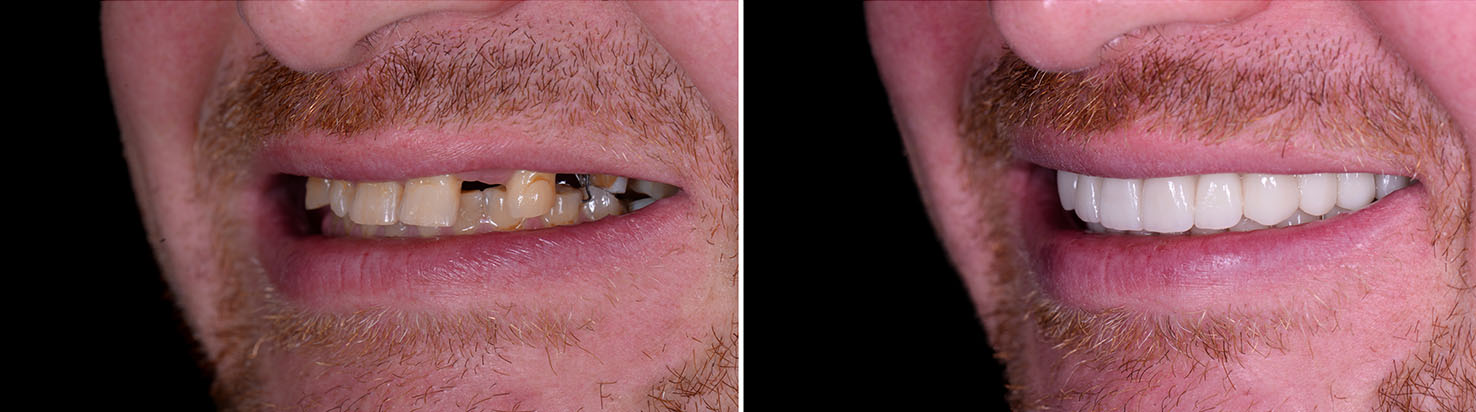
Choosing a dental team that offers comprehensive implant care — from planning and surgical placement to restorative finishing and maintenance — simplifies the process and improves continuity of care. Our Tustin office blends modern technology with a patient-centered approach so your treatment is coordinated, clear, and focused on reliable results.
Andrew J Najem, DDS and the team emphasize open communication at every stage so you understand your options and feel comfortable with the plan. Whether you need a single replacement or a full-arch solution, we design treatment around your health, goals, and long-term function.
If you’re ready to explore implant dentistry, the best next step is a focused consultation where we review your medical and dental history, examine your mouth, and discuss imaging if needed. From that starting point we can map a clear path forward that reflects your functional needs and esthetic priorities.
Dental implants offer a predictable way to restore chewing function, protect bone, and renew confidence in your smile. When planned and cared for properly, they are among the most durable solutions available for replacing missing teeth.
Please contact our office for more information or to schedule an appointment. We’re happy to answer your questions and explain the options that best suit your smile.


If you've lost a tooth due to injury, decay, gum disease, or any other reason, we recommend dental implants to replace missing teeth. Dental implants come the closest to replicating the look, feel, and function of your natural teeth.
Dental implants are placed into the jawbone and mirror the same function as the root of a tooth. The procedure for dental implants is usually performed while a patient is sedated. Patients who undergo IV sedation must have an empty stomach and transportation home following the procedure. Most sedation patients will have little to no memory of the procedure occurring.
Generally, dental implants are made out of a biocompatible metal such as titanium. Biocompatible metals are also used for other common bone implants (such as shoulder, hip, and knee replacements). The visible portion of the implant is usually made out of porcelain and is custom-made to match your existing teeth.
Dental implants are designed to fuse to the bone, which makes them become permanent fixtures. Typically speaking, the success rate is nearly 100%. There are few cases in which the implant will not fuse as intended and must be removed. If this happens to occur, the procedure can be attempted again a few months later.
Dental implants are not usually covered by dental insurance, but may be covered under a patient's medical insurance. Our office and your insurance company can discuss coverage options with you based on your individual case and treatment plan.
It's easy... just take care of an implant as if it's a natural tooth! This involves regular brushing, flossing, and dental checkups. If you have any concerns about your implant, contact us immediately.

Whether it's a first visit or your fiftieth, Andrew J Najem, DDS is ready when you are.
Reach our Tustin office directly! Give us a call and we will help you find a time that works.