
Modern dentistry gives us many reliable ways to replace missing teeth, and removable dentures remain an important, time-tested option. Advances in materials, fit techniques, and esthetic design mean dentures can now look and function far better than most people expect.
At the office of Andrew J Najem, DDS, we use precise fabrication methods and careful clinical protocols to produce dentures that are comfortable, stable, and natural in appearance. Our approach balances durable materials with attention to facial support and speech so you can smile, eat, and speak with confidence.
We focus on personalized care: evaluating each patient’s oral health, bite dynamics, and daily needs before recommending the denture style that will best restore function and confidence. Whether you need to replace a few teeth or an entire arch, our team helps you understand what to expect at every stage.
Losing teeth alters the way your mouth works. Even a single missing tooth can change how your bite distributes force, and multiple losses accelerate changes to chewing efficiency, speech patterns, and overall nutrition. Dentures are designed to restore those functions so you can maintain a balanced, healthy mouth.
Beyond mechanical issues, missing teeth influence the surrounding tissues. Without tooth roots to stimulate the jawbone, bone volume can diminish over time. That bone loss changes facial contours and can make the lower face appear sunken. A well-designed denture helps replace tooth form and provides support to the lips and cheeks.
People also describe a loss of confidence after tooth loss. Restoring a complete smile with a thoughtful prosthesis can reverse some of the social and emotional impacts, improving comfort when talking or eating in public and giving patients a renewed sense of normalcy.
Dentures are removable prosthetic devices that rest on the gums and support an artificial set of teeth. They combine a base—often shaped and shaded to resemble natural gum tissue—with teeth that match your size, color, and bite. The result is a restoration that can replace a few teeth or an entire arch.
Unlike fixed restorations, dentures are taken out for cleaning and overnight rest. This removability makes it easier to care for the soft tissues and any remaining natural teeth. It also allows for regular inspection and maintenance to keep the mouth healthy as tissues change over time.
Contemporary denture teeth and base materials are engineered for durability and a lifelike look. With accurate impressions, careful try-ins, and occlusal adjustments, modern dentures can provide predictable function and a pleasing appearance for many years with proper care.
Choosing between a full denture and a partial denture depends on how many teeth remain and the health of those teeth. If most natural teeth are intact and healthy, a removable partial can fill gaps and help stabilize the bite. If an entire arch is missing or requires removal, a full denture becomes the preferred solution.
Our evaluation looks at chewing patterns, the condition of gum tissue, and the shape of the jawbone to determine which design will deliver the best comfort and retention. We consider lifestyle needs—such as speech, eating preferences, and esthetic goals—so the prosthesis fits your daily routine.
When appropriate, hybrid approaches combine removable dentures with other treatments to improve stability. For example, anchoring a denture to existing teeth or implants can reduce movement and increase chewing efficiency while still offering the hygiene advantages of a removable appliance.
Full dentures replace all teeth in the upper or lower arch and are custom-formed to sit on the gum-covered jaw. Their design focuses on creating a stable seal, preserving facial support, and establishing comfortable bite relationships so speech and chewing feel natural.
Conventional full dentures are made after healing from extractions is complete, which often yields a more stable long-term fit. Immediate full dentures are placed the same day teeth are removed, allowing patients to avoid a gap in their smile during healing. Immediate prostheses typically require adjustments or relines as tissues remodel.
Overdentures
Overdentures gain extra retention by fitting over prepared tooth roots or special attachments. Preserving a few well-supported roots beneath a denture can improve stability and help maintain bone volume.
Implant-assisted dentures
When implants are placed in the jaw, a denture can be designed to clip or snap onto those attachments. Implant-assisted dentures dramatically reduce shifting and increase bite strength, making them an excellent option when greater retention is desired.
Partial dentures replace several missing teeth while using the remaining healthy teeth for support and retention. They prevent neighboring teeth from drifting into empty spaces and help restore the bite so chewing forces are distributed more evenly.
Partial frameworks vary from metal-based castings to flexible resin designs. Each material offers different advantages for comfort, strength, and discreetness; selecting the right option depends on where the missing teeth are and how the remaining teeth will be used for anchorage.
Because partials interact with natural teeth, we carefully evaluate the health of those anchor teeth before recommending a design. Stabilizing and preserving remaining teeth is essential to the longevity of any removable prosthesis.

A successful denture begins with a thorough clinical assessment and clear communication about goals. We use detailed impressions, bite records, and visual evaluation to map the ideal tooth positions and support points. This planning phase is where function and esthetics are balanced.
Laboratory work is equally important. Skilled technicians shape the denture base and arrange teeth to match your facial proportions and smile line. Try-in visits allow us to test appearance and bite before the final processing, so the finished appliance feels natural and performs well.
When underlying issues exist—such as gum disease, uneven bite forces, or failing teeth—those conditions are addressed before fabricating the final denture. Pre-prosthetic care helps ensure the new appliance fits predictably and minimizes the need for frequent adjustments later.

Adapting to a new denture takes a short period of patience. Initial changes can include increased saliva, altered speech patterns, and sensitivity in pressure-prone areas. Small adjustments at follow-up visits are common and help fine-tune fit for comfort and function.
Eating with a new denture usually starts with softer foods and gradual reintroduction of firmer items. Learning to chew with both sides and cutting food into manageable pieces helps the oral muscles adapt without overloading the prosthesis.
Proper daily care keeps both dentures and the mouth healthy: rinse and brush the appliance, clean any remaining natural teeth and gums, and soak the denture when it’s not being worn. Regular checkups let us monitor tissue changes and perform relines or repairs when necessary to maintain a secure fit.
Follow-up care and relines
As jawbone and gum tissue remodel over months and years, relines or adjustments may be needed to restore comfortable contact and retention. Routine dental visits are the best way to catch fit issues early and extend the useful life of a denture.
When added stability is beneficial
Patients who need extra retention often benefit from implant attachments or precision components that limit movement. These enhancements can improve chewing ability and overall satisfaction with a removable solution.

Our practice emphasizes clear guidance from your first consultation through delivery and long-term care. We explain clinical findings, walk you through each stage of fabrication, and schedule follow-ups to check fit and function so you always know what to expect.
Whether you are exploring your first denture or replacing an older appliance, the goal is the same: a dependable restoration that restores chewing, supports facial esthetics, and feels comfortable in daily life. We tailor materials and design to the specific needs of each patient.
If you have questions about how dentures might fit into your treatment plan, or you’d like to arrange an evaluation, please contact us for more information. Our team is happy to explain options and help you take the next step toward a complete, confident smile.


Today, it’s easier than ever to replace missing teeth and achieve natural-looking, durable, and long-lasting results! Depending on a patient’s dental needs, lifestyle, expectations of care, and budget, choices can include conventional fixed bridgework, dental implants, or removable partial and complete dentures. At the office of Andrew J Najem, DDS, we’ll discuss all your options in care and answer all your questions as you choose the solution that’s right for you.
With advances in dental materials and technology, today’s dentures are more comfortable and realistic-looking than ever before.
Whether you wear partial or complete dentures, it’s essential to see the dentist for routine care. Besides checking the fit and condition of your dentures and making any necessary adjustments, you’ll also receive a comprehensive exam to check on the health of any remaining teeth as well as the soft and hard tissues in and around the oral cavity.
A same-day denture offers an accelerated design and fabrication process that allows a patient to go from impression taking to denture insertion in a single day.
For patients who don’t want to wait after having teeth extracted, an immediate denture can be inserted the same day your teeth are removed. Sometime later you may need the denture relined to address any changes in its fit once the extraction sites have completely healed.
While no one wants to drop or break a partial or complete denture, accidents do happen. The good news is that in some cases, your partial or complete denture is reparable. It all depends on the extent of the damage. Don’t hesitate to contact our office if you’ve broken or damaged your denture. We’re happy to help.
The simple act of taking your partial denture in and out can cause certain types of metal clasps to loosen over time. When you come in for your checkup visit or contact our office for an adjustment, we’ll assess the fit of your partial and tighten the clasps for improved stability and comfort.
While rebuilding a complete smile is a worthwhile investment, our office is sensitive to the costs involved in dental care. We customize care and will discuss which treatment options address your needs, lifestyle, and budget. How much a new denture will cost depends on the type of the prosthesis, its design, and the materials used to fabricate the supportive base, teeth, and clasps or precision attachments. Dentures that include the placement of dental implants for added retention and stability typically involve additional costs.
If you have dental insurance, your coverage may include a new or replacement set of dentures. Our staff is happy to review your coverage with you to ensure you are maximizing your insurance benefits while minimizing any out of pocket expenses.
At the office of Andrew J Najem, DDS, we provide an extensive range of dental services, including the latest and most effective methods to help patients with missing teeth rebuild complete and beautiful smiles. As skilled and experienced professionals, we recognize that every patient is different, and every smile is unique. We’re passionate about what we do and take great pride in providing personalized treatment plans while treating our patients as valued partners in care.
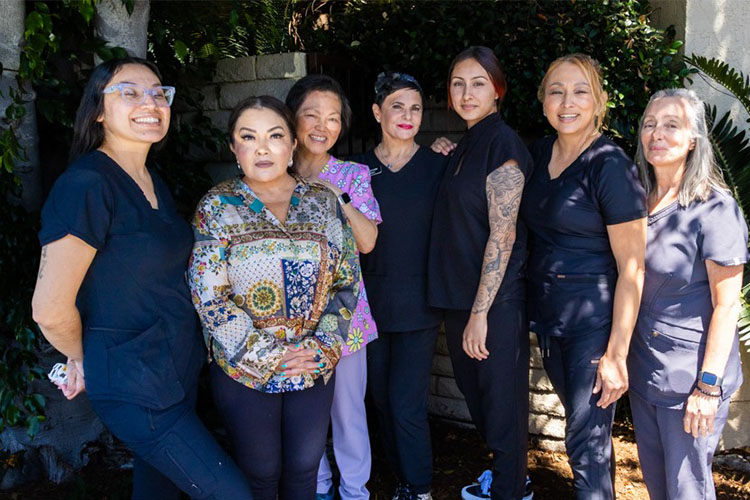
Whether it's a first visit or your fiftieth, Andrew J Najem, DDS is ready when you are.
Reach our Tustin office directly! Give us a call and we will help you find a time that works.
